Activities & Excursions
Do as much, or as little, as you like
The island itself is the activity, but if you want more, there is plenty waiting just offshore and beyond.
Island Walks
On foot through
the island
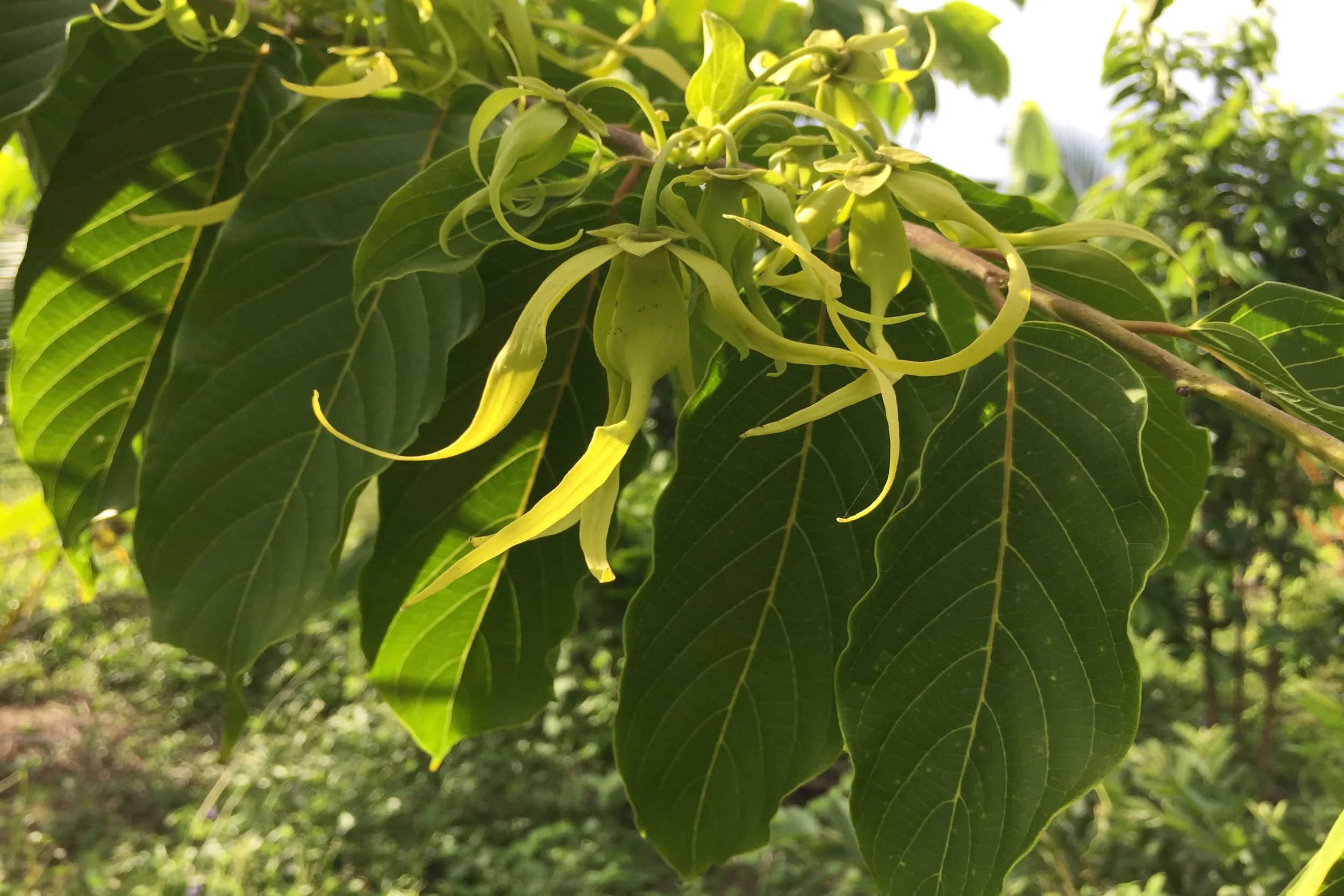
Nosy Be is often known as the "Perfume Island", thanks to the ylang-ylang tree (Cananga odorata), whose fragrant flowers are distilled for use in some of the world's most famous perfumes. Although originally introduced from Southeast Asia, ylang-ylang has become an important part of the region's history and identity.
Here on Nosy Sakatia, a short walk from the lodge leads through our own ylang-ylang plantation, where guests can experience the fragrance that helped shape the region's perfume industry. Continuing along the footpath, the route passes beneath towering mango trees and areas where jackfruit grows naturally before descending into the village of Antanambe.
In Malagasy, tanàna means "village" and be means "big", making Antanambe the "big village" — a fitting name for the oldest and largest village on the island.
Along the way, guests pass the local school and island dispensary before reaching the heart of the village. Here, it is possible to experience everyday island life, browse locally produced vanilla and handicrafts, or simply spend a few moments observing the rhythm of the community before returning to the lodge along the shoreline.
Wildlife note
Wildlife on your doorstep
Nosy Sakatia is one of the few places in Madagascar where ylang-ylang trees grow wild along the coastal paths. The island walk, roughly 90 minutes at a comfortable pace, takes you through forest, past the local village and along the shore.
The walk can be done independently or with a local guide who can explain what you're seeing along the way.

Green & Hawksbill Turtles
The waters surrounding Nosy Sakatia are home to both green turtles and hawksbill turtles, making the island one of the best places in the Nosy Be archipelago to encounter these remarkable marine reptiles.
Directly in front of the lodge lies a shallow seagrass meadow where green turtles feed throughout the year. Guests can often observe them while snorkelling, sometimes within just a few minutes of entering the water. The area has become one of the island's most popular wildlife experiences, offering respectful encounters in a natural environment.
Sea turtles nest throughout the Nosy Be archipelago, including Nosy Sakatia and several surrounding islands. Nesting occurs year-round, with seasonal peaks typically around April to May and again during October and November, coinciding with changes in water temperature and ocean conditions.
Sakatia Lemurs
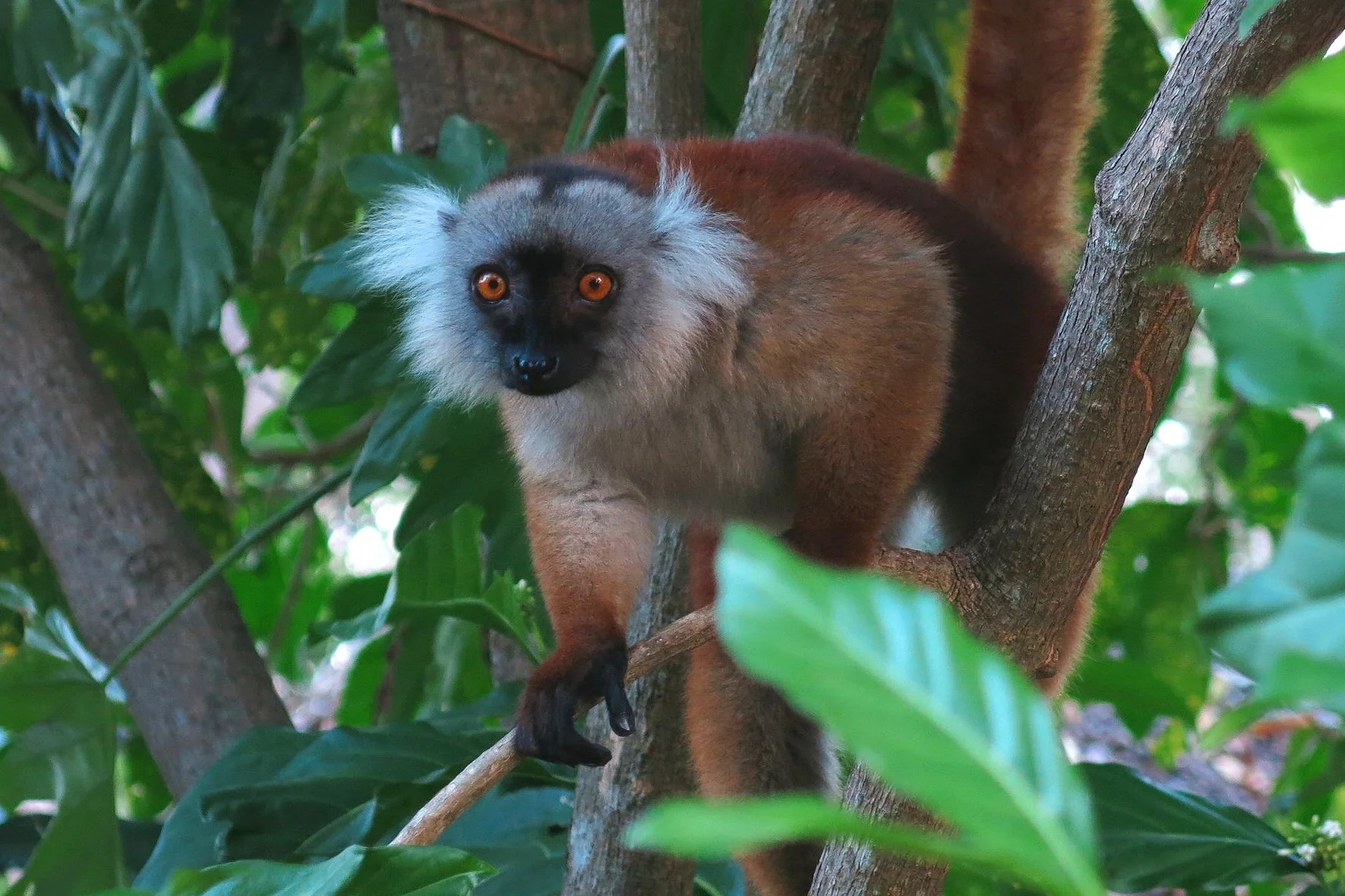
You don’t need to leave the island to see lemurs. Nosy Sakatia is home to three groups of black lemurs, Eulemur macaco. Males are black, while females are russet brown, so don’t be surprised if they look different from the name.
The lemurs are often seen moving through the trees around the island, particularly in the early morning and late afternoon. Around sunrise and sunset, guests staying at the lodge can often hear their distinctive calls carrying from the sacred forest behind the glamping tents, one of those simple island sounds that quickly becomes part of the Sakatia experience.

Whale Sharks
Whale sharks visit the waters around Nosy Sakatia seasonally, with sightings most commonly occurring during October and November. During this period, guests may have the opportunity to join dedicated snorkelling excursions to observe the world's largest fish in its natural environment.
Sakatia Lodge follows a strict whale shark code of conduct and approach protocol designed to minimise disturbance to the animals and ensure respectful encounters. All guests receive a briefing before entering the water, and excursions are conducted in accordance with guidelines developed by the Madagascar Whale Shark Project, an organisation that the lodge actively supports and works alongside.
Since the project began, more than 400 individual whale sharks have been identified within the region, helping researchers better understand their movements, behaviour and seasonal presence in north-west Madagascar.
If you are interested in learning more, ask the dive team about the whale sharks of Nosy Be. Their story, migration patterns and the ongoing research taking place in the region make these encounters even more memorable.
Chameleons, Geckos & Birdlife
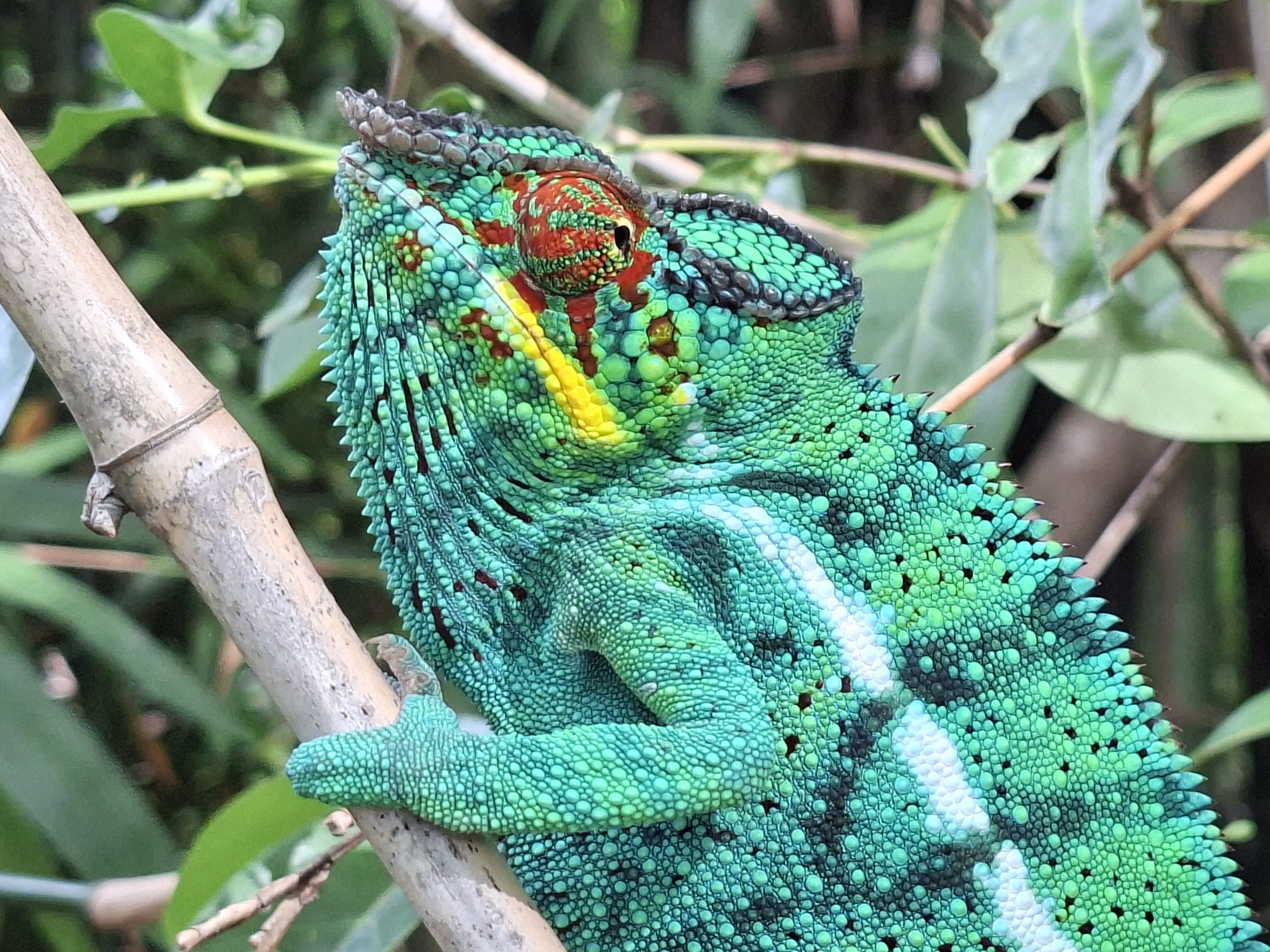
Madagascar is home to nearly half of the world's chameleon species, and Nosy Sakatia offers visitors the chance to encounter some of them in their natural environment. The island's best-known species is the Panther Chameleon, whose males display vivid shades of green highlighted with yellow, orange and red markings.
For those with a keen eye, Sakatia is also home to the remarkable Brookesia stumpffi, a tiny leaf chameleon found only in north-west Madagascar. Perfectly camouflaged amongst leaves, moss and branches, it is easily overlooked despite being one of the island's most fascinating residents.
The island is also home to several species of gecko, from large day geckos with brilliant green colouring to well-camouflaged nocturnal species that emerge after sunset.
Birdlife is particularly active around the lodge gardens, mangroves and shoreline. Madagascar kingfishers, crested drongos, sunbirds, green pigeons and the occasional Madagascar paradise flycatcher can all be seen by observant guests. Early mornings and late afternoons are often the best times to explore with binoculars in hand.
As the sun begins to set, large fruit bats leave their daytime roosts and cross the island in search of food, providing another reminder that wildlife on Nosy Sakatia extends well beyond the reef.
Snorkelling
Snorkelling from the lodge
Some of Nosy Sakatia's best snorkelling begins just a few steps from your bungalow. Directly in front of the lodge lies a protected seagrass meadow where green turtles feed throughout the year, making turtle encounters one of the island's most memorable experiences.
Beyond the turtle reserve, the house reef stretches along the shoreline with shallow coral formations and a variety of marine life. Depending on the tide, the team will show you the best access points and conditions for the day. Complimentary snorkelling equipment is available for guests to use during their stay.
The shallow waters around the island are home to colourful reef fish, surgeonfish, damselfish, Picasso triggerfish, the distinctive Japanese inflator filefish and many other species that thrive amongst the corals and seagrass beds. Garfish are also commonly seen cruising just beneath the surface.
For guests wishing to explore further, boat trips can access additional snorkelling sites around Nosy Sakatia and nearby islands, including the famous marine reserve of Nosy Tanikely.
- Turtle reserve directly in front of the lodge
- Complimentary snorkelling equipment
- House reef and Swimming Pool reef access
- Boat access to additional snorkelling sites
- Nosy Tanikely marine reserve excursions
Around the island by boat
A boat tour around the island takes you past hidden beaches, the mangroves and rocky coastline, with stops to snorkel and swim. A half-day outing that gives you a completely different perspective on the island you’ve been calling home.

Excursions
Nosy Iranja
Half day
Two small islands connected by a white sand sandbar at low tide, one of Madagascar’s most photographed scenes. This half-day trip can be combined with a stop at Nosy Antsoha, the lemur island.
Minimum 4 guests required. We can combine guests from the lodge where needed.
Nosy Komba
Full Day
Observe the free-ranging black lemurs along the village path. Browse the local artisan market for curios and crafts, and spend time exploring one of the best-known islands near Nosy Be.
Snorkelling can be included when combined with Nosy Tanikely.
Nosy Be & Hell-Ville
Half or full day
The nearest large island. Visit the ylang-ylang distillery, the local market, vanilla factory and waterfall near Ambatozavavy. A good complement to a slower island stay.
Nosy Tanikely
Half day
One of Madagascar’s most celebrated marine parks. Crystal clear water, vibrant reef and excellent snorkelling directly from the beach.
Minimum 4 guests required.
Lokobe Nature Reserve
Full day
A protected rainforest reserve on Nosy Be, known for its wildlife, forest trails and rich biodiversity. A rewarding excursion for guests interested in Madagascar’s endemic species and natural landscapes.
Planning your excursions
PLAN
Mention your interest when you enquire and we’ll arrange everything from the lodge. Nosy Tanikely and Nosy Iranja require a minimum of 4 guests, we can combine guests where needed.
Day excursions
- Nosy Be town and markets
- Nosy Komba (hand crafted curios)
- Lokobe Nature Reserve
- Nosy Tanikely
- Nosy Iranja (white-sand islet)
- Nosy Be full island tour
- Nosy Be Mont Passot (sunset)
On and around the island
- Snorkelling with green turtles
- Boat tour around Nosy Sakatia
- Island walk with local guide
- Deep-sea fishing with preferred partners
- Sunset watching from the hilltop viewpoint
- Stargazing — minimal light pollution
- Island massage bungalow
- Book exchange
- Games bungalow with cards, backgammon and pétanque
Not sure where to start?
Tell us what you enjoy and we’ll help you plan your days.